Most AI-generated “scary food” looks like melted trash. The reason? You are asking for a monster, not a character. The grotesque food figurine prompt changes everything.
This unique prompt technique forces AI image generators to build fully articulated designer toys—except instead of vinyl plastic, they are made from actual food with all the disgusting details intact. The difference is structural. A character has limbs, stands in a pose, and exists as a physical object you could hold. That is what separates amateur grotesque food figurine prompt attempts from professional results.
In this guide, you will learn how to use the master template across Midjourney or Stable Diffusion to create hyper-realistic food monsters that look like limited-edition collectibles.
The Master Grotesque Food Figurine Prompt
Copy this grotesque food figurine prompt template:
UNLOCK EXCLUSIVE PROMPTS!
FREE ACCOUNT REQUIRED TO VIEW THIS CONTENT
Create a free account to unlock this prompts (takes 30 seconds).
By creating an account, you agree to our
Privacy Policy.
The Negative Prompt for Better Results
This grotesque food figurine prompt negative filter removes common AI mistakes:
How to Customize Your Grotesque Food Figurine Prompt
Here are four tested variations of the grotesque food figurine prompt that produce professional-grade results:
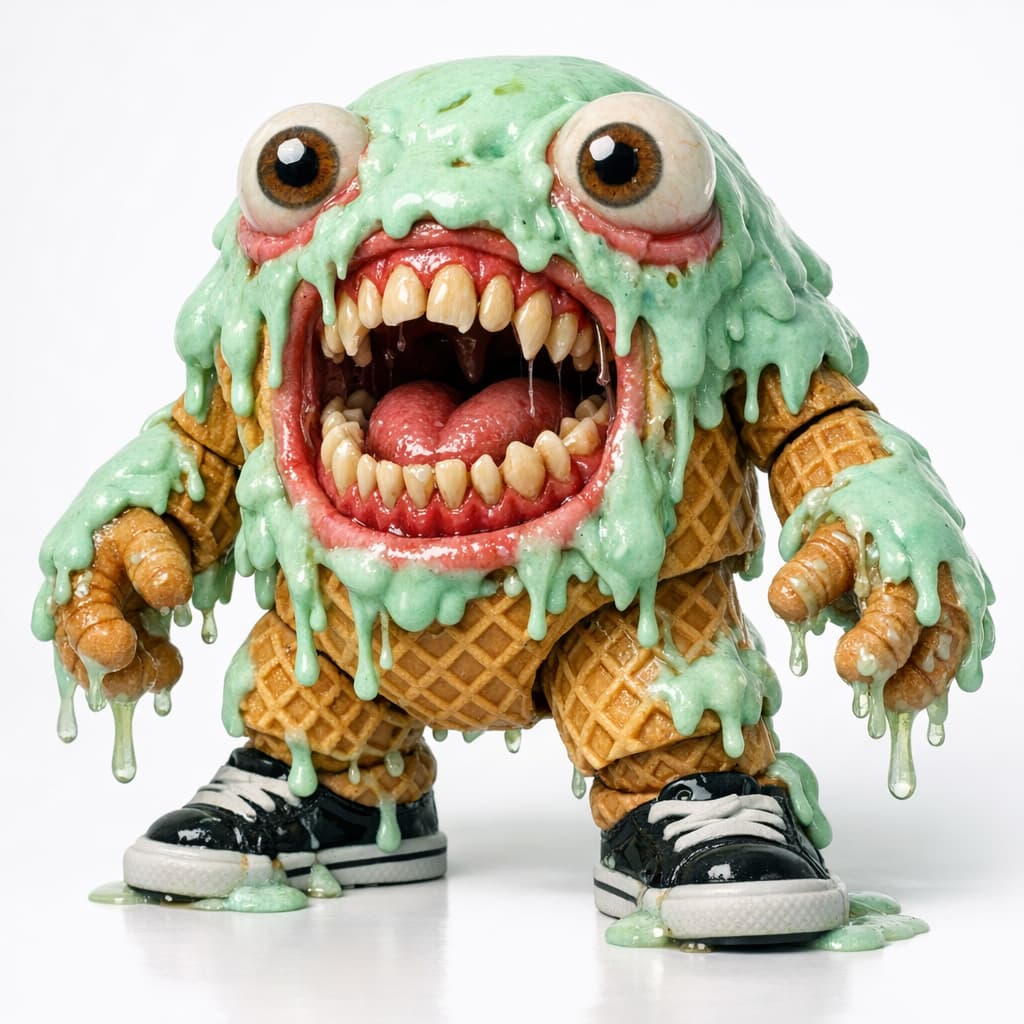
1. The Screaming Ice Cream Cone
- Food Item: Waffle ice cream cone
- Food Texture: Crispy waffle cone grid pattern with melting mint green ice cream dripping down
- Horror Detail: Massive open mouth filled with realistic human teeth, bulging glossy eyeballs, pink gums, sticky drips hanging from the arms
- Why it works: High contrast between dry waffle texture and wet melting ice cream creates visual depth. This grotesque food figurine prompt variation emphasizes the material contrast.
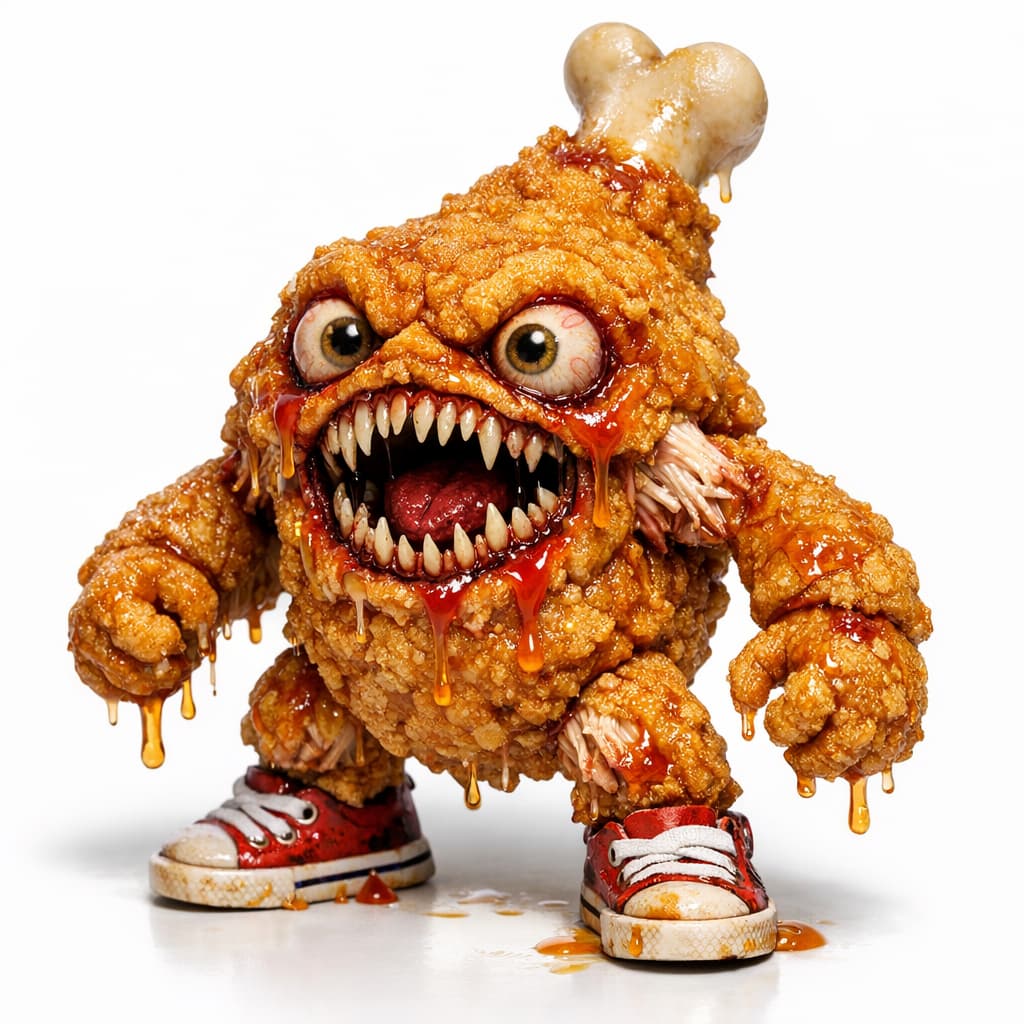
2. The Fried Chicken Beast
- Food Item: Fried chicken drumstick
- Food Texture: Golden crispy breading with visible bumps and oil sheen, shredded meat at the joints
- Horror Detail: Wide screaming mouth with sharp teeth, crazed eyes, chicken skin covering arms, grease dripping from body
- Why it works: Organic, textured food surface with realistic lighting on the breading. The grotesque food figurine prompt handles complex textures exceptionally well.
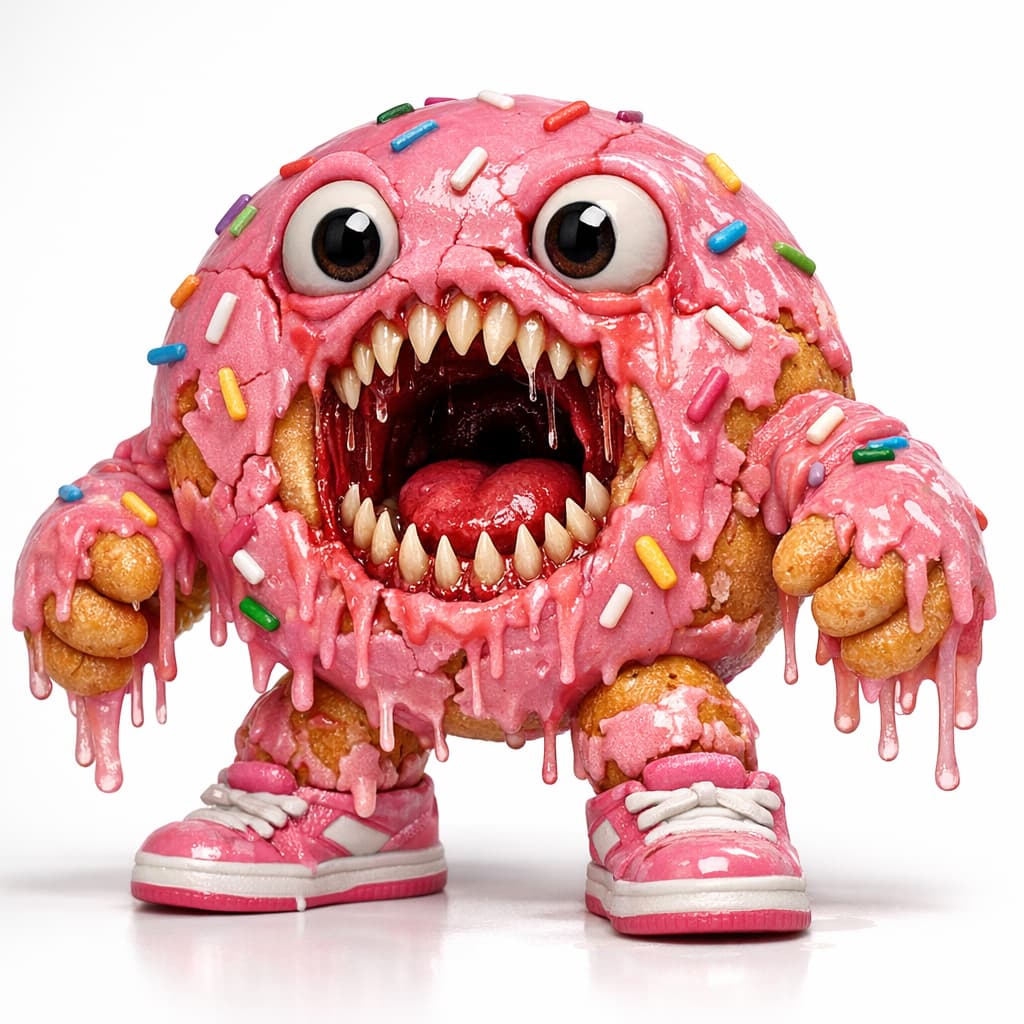
3. The Donut Panic
- Food Item: Frosted donut
- Food Texture: Pink glazed frosting coating with rainbow sprinkles embedded in surface
- Horror Detail: Enormous terrified mouth showing all teeth, wide panicked eyes, cracked frosting revealing dough underneath, frosting stalactites hanging from limbs
- Why it works: Glossy, colorful finish makes the horror elements pop visually. Perfect for testing your grotesque food figurine prompt skills.
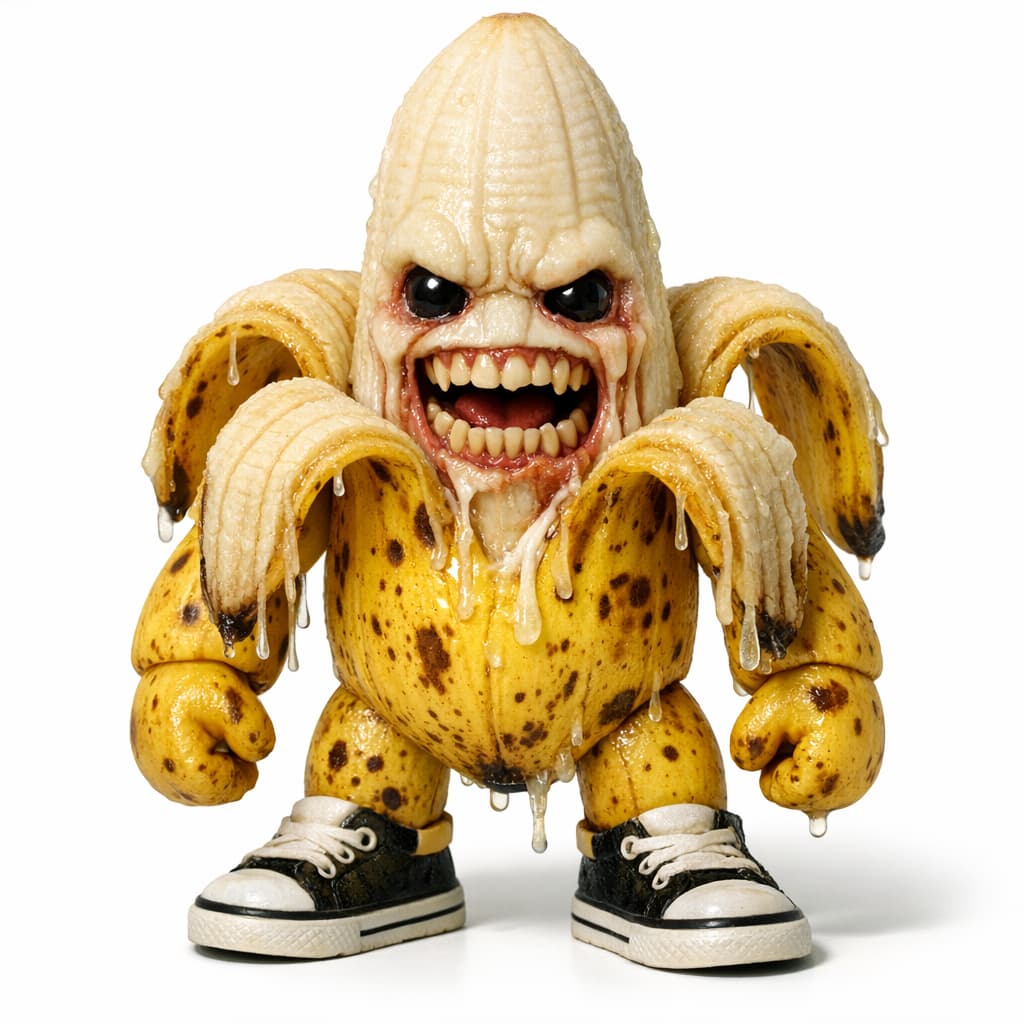
4. The Banana Nightmare
- Food Item: Peeled banana
- Food Texture: Yellow banana peel forming the body with brown age spots, white fruit flesh exposed inside
- Horror Detail: Distressed face with human teeth visible, peel hanging like torn skin, slimy texture on fruit sections
- Why it works: Natural peeling effect looks disturbingly organic. This grotesque food figurine prompt example shows how to handle exposed internal textures.
Advanced Grotesque Food Figurine Prompt Techniques
To get the most from your grotesque food figurine prompt, focus on three critical elements that AI models respond to best:
Material Specificity: Instead of saying “looks like food,” describe the exact texture. Use terms like “crispy breading with oil sheen” or “melting frosting with visible drips.” The grotesque food figurine prompt works because it forces the AI to render real materials, not generic surfaces.
Articulation Language: The phrase “fully articulated body with chunky arms and legs” is crucial. It tells the AI this is a posed figure, not a static object. Without this, your grotesque food figurine prompt will generate floating blobs instead of standing characters.
Photography Context: By specifying “professional product photography lighting” and “clean white studio background,” you trigger the AI’s training data of high-end commercial photography. This makes your grotesque food figurine prompt output look like it belongs in a design portfolio.
Why This Grotesque Food Figurine Prompt Works
The secret is in the three-layer structure: “Designer Vinyl Toy” (which forces articulated limbs and proportions), “Realistic Food Texture” (which replaces plastic with actual material like melting ice cream or crispy breading), and “Wearing Tiny Sneakers” (which grounds the figure and triggers the AI’s product photography mode). When you specify “Clean White Studio Background,” the model shifts from abstract art generation to professional product render—giving you crisp shadows, proper lighting falloff, and that tangible “I could buy this” feeling. The result looks like a limited-edition collectible, not a prompt output.
The grotesque food figurine prompt technique transforms ordinary AI art into professional-grade designer toy concepts that work for portfolios, commercial projects, or digital product sales.